FedEx Office
B2B pRINT Legacy System Migration
Overview
As the Design Lead, I spearheaded the transformation of a legacy commercial catalog system into a modern, efficient ordering platform for B2B customers. The goal was to migrate users from a high-friction, outdated environment to a streamlined system that simplified complex print ordering and project management.
The Challenge
The existing B2B platform was built on legacy architecture that made ordering specialized print products difficult and time-consuming.
Fragmentation: Users had to jump between different systems to manage files and place orders.
Manual Bottlenecks: Lack of automation in product configuration led to increased errors and customer support calls.
User Resistance: Migrating long-term business clients required a design that was intuitive enough to minimize learning curves while being powerful enough to handle high-volume needs.
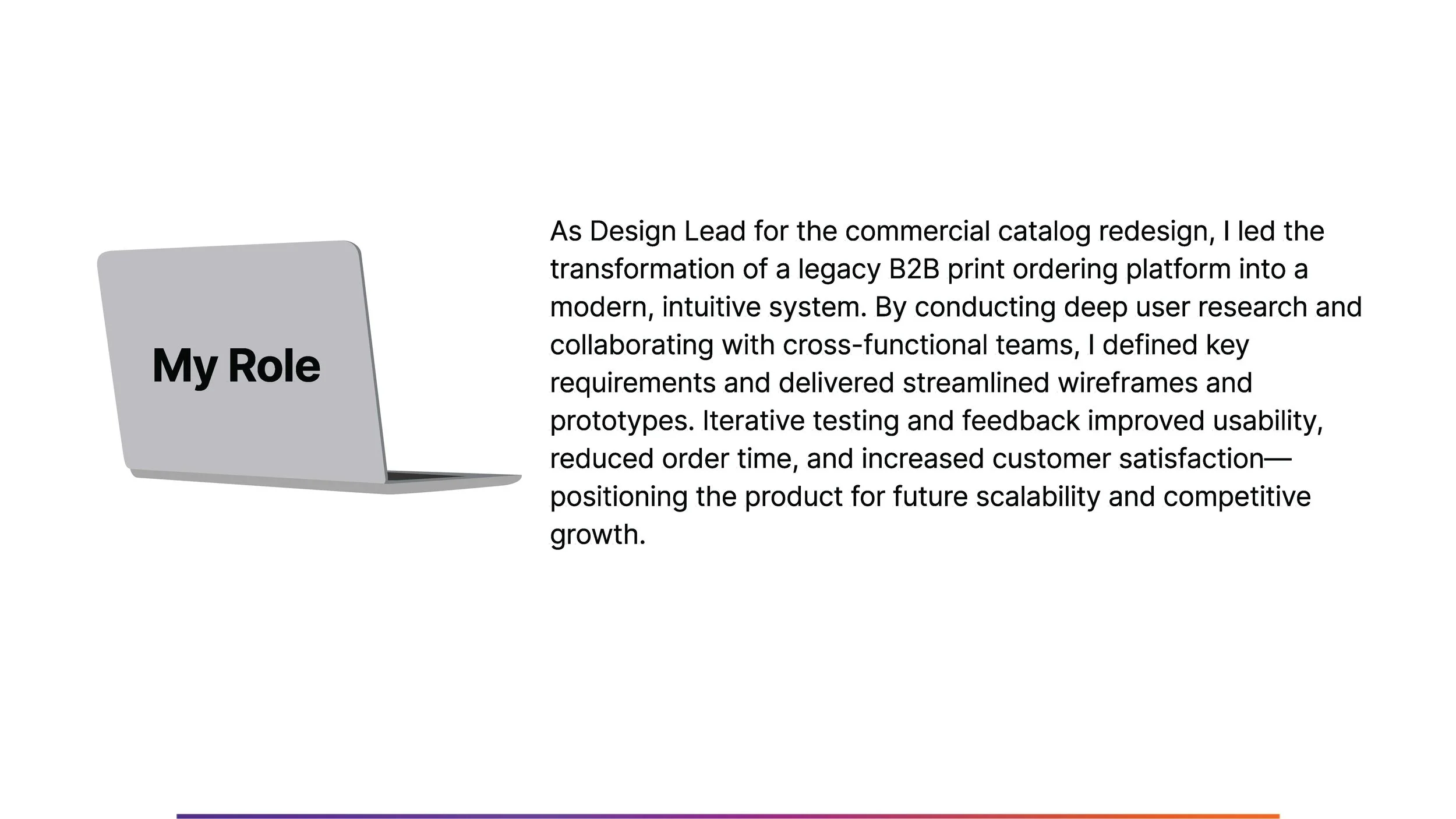
My Role: Design Lead
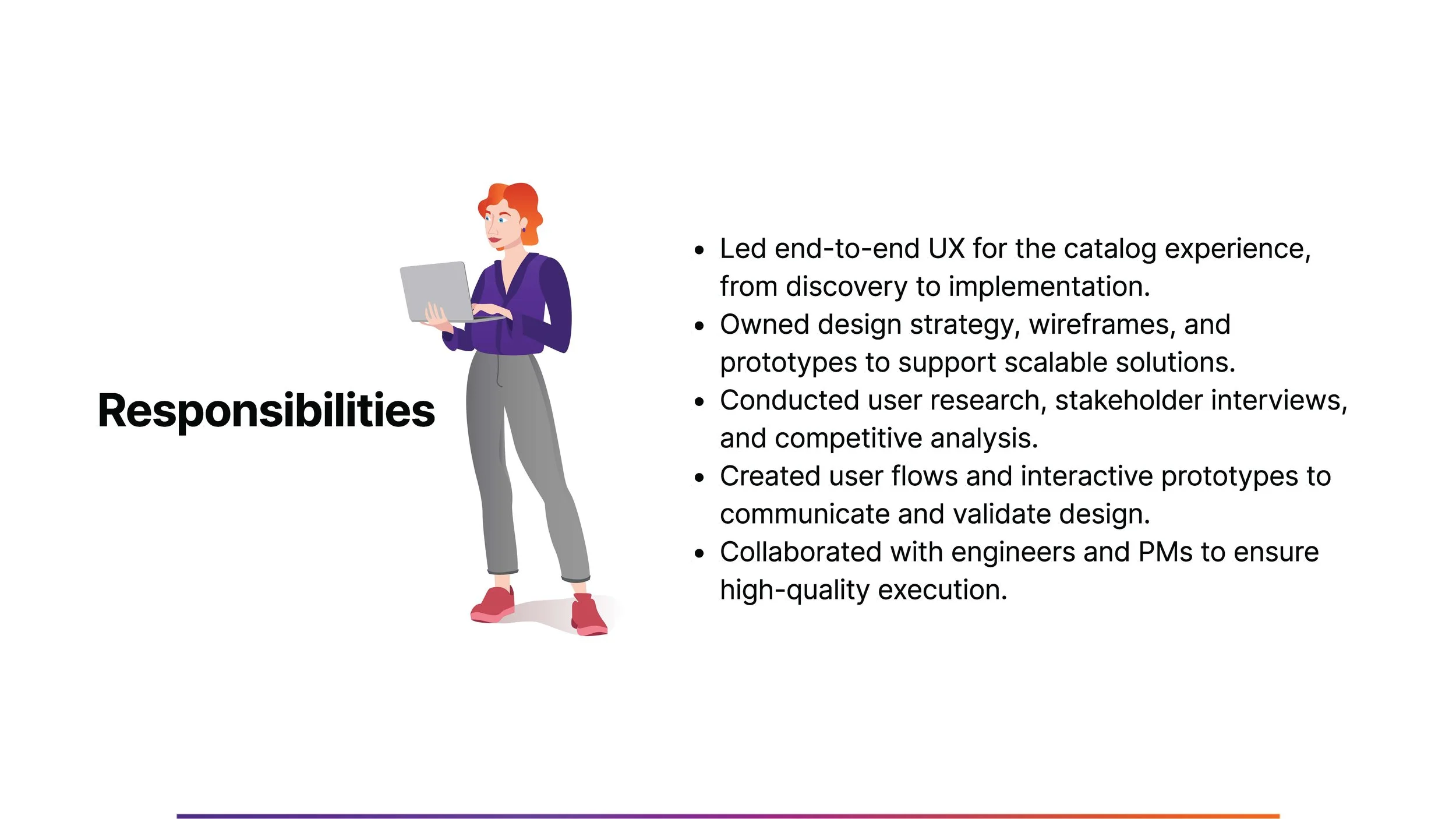
I owned the design process from discovery through implementation, leading a cross-functional team of engineers and product owners.
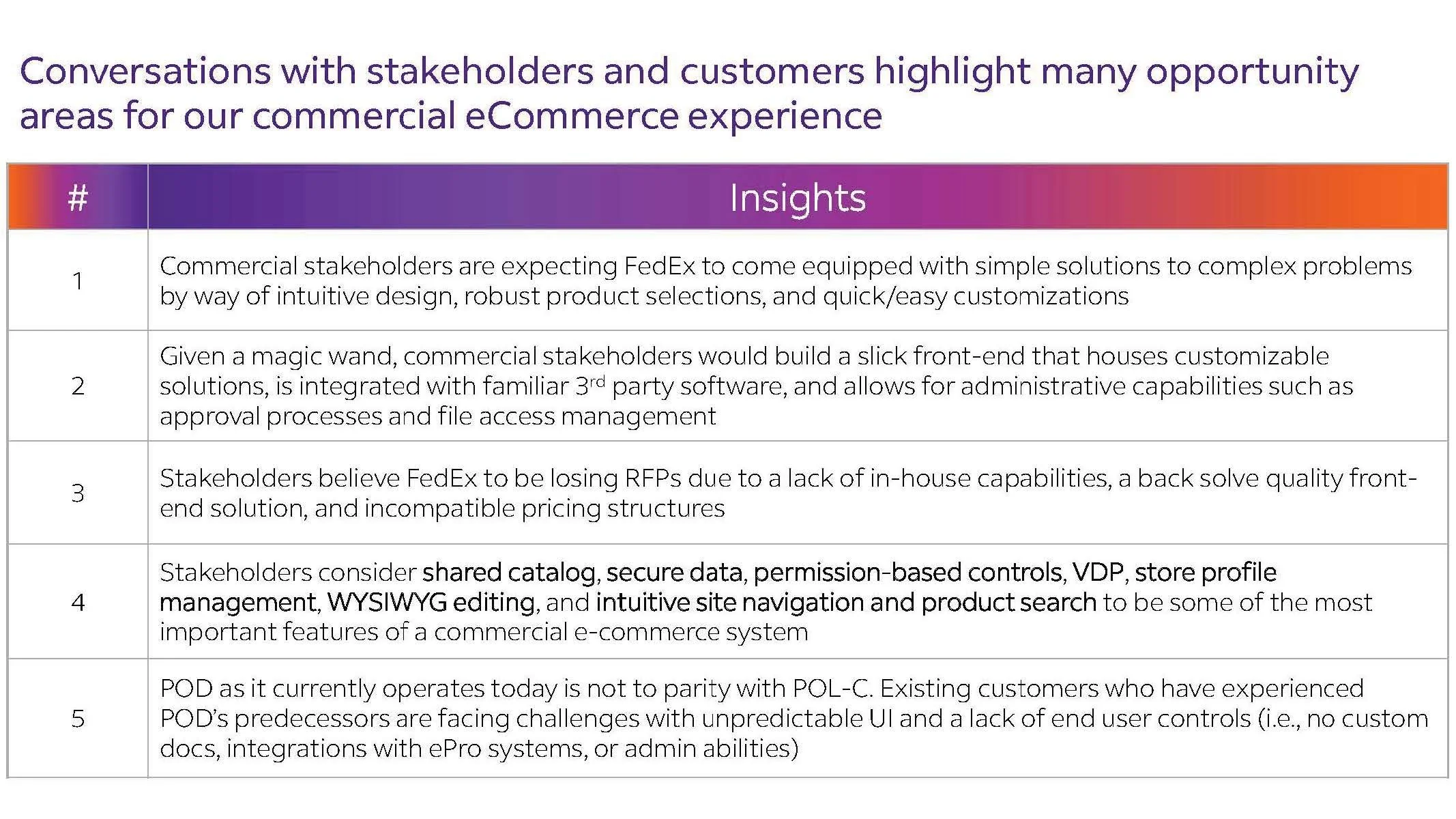
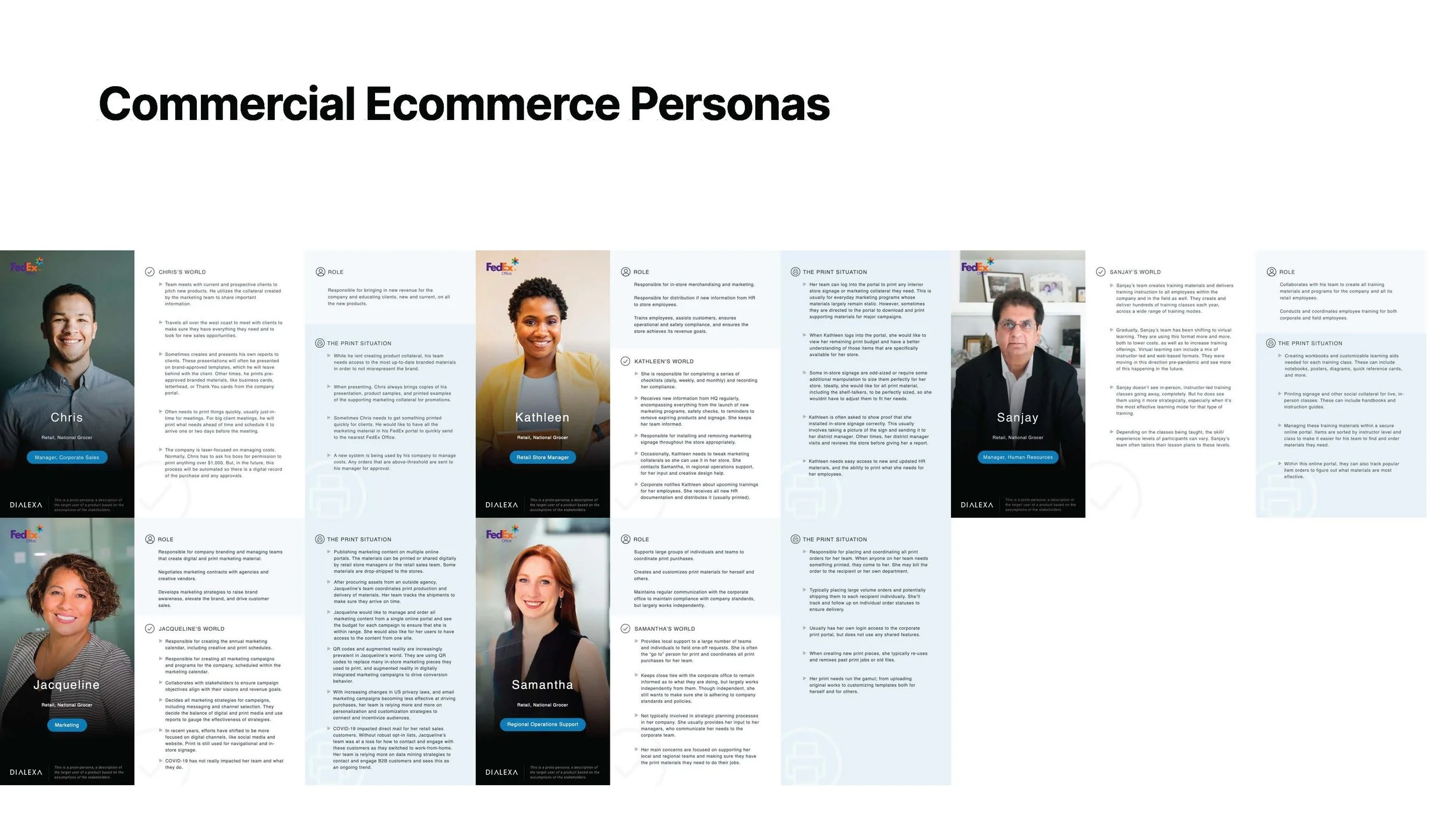
Research: Conducted discovery sessions, competitive analysis, and stakeholder interviews.
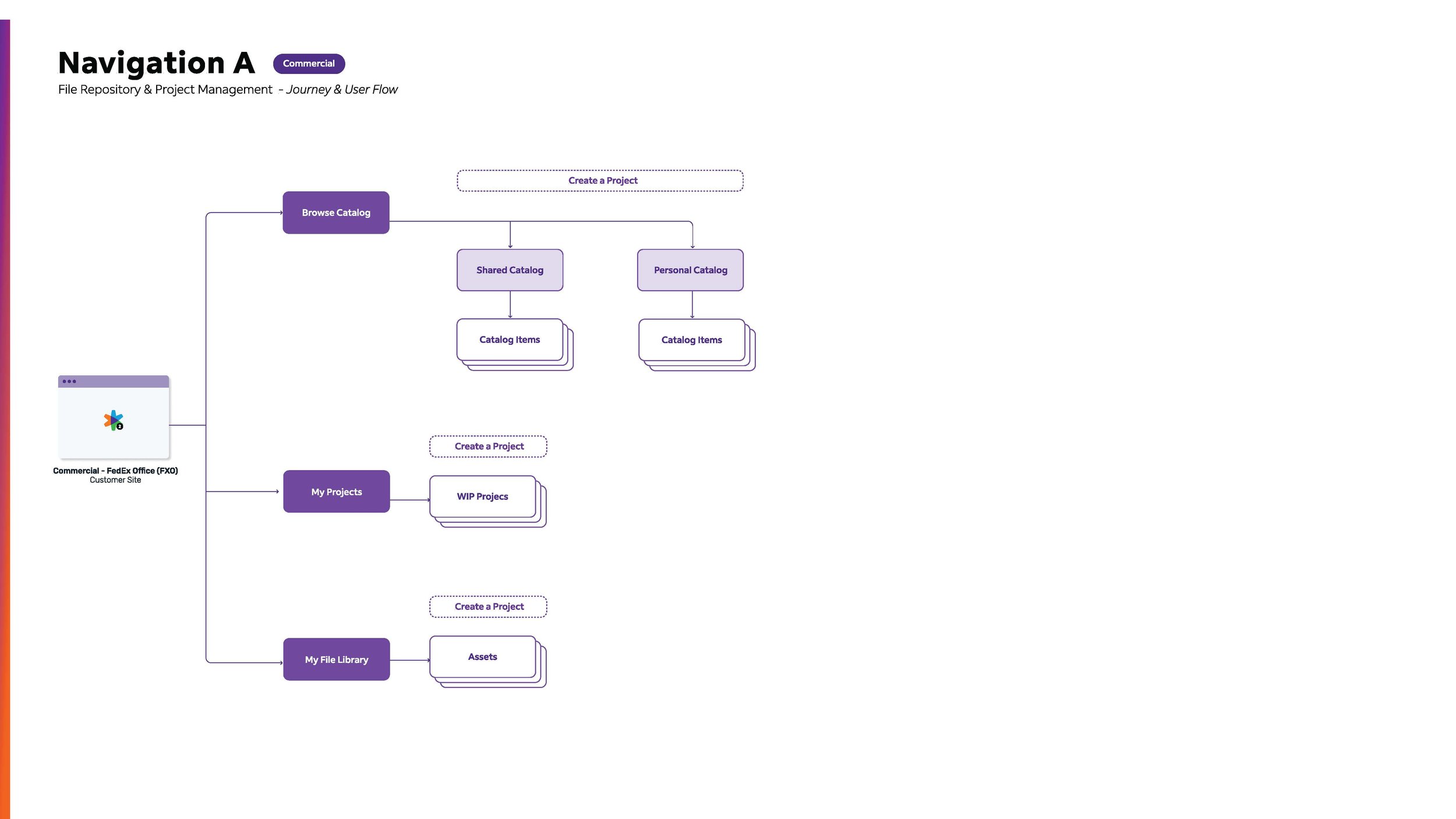
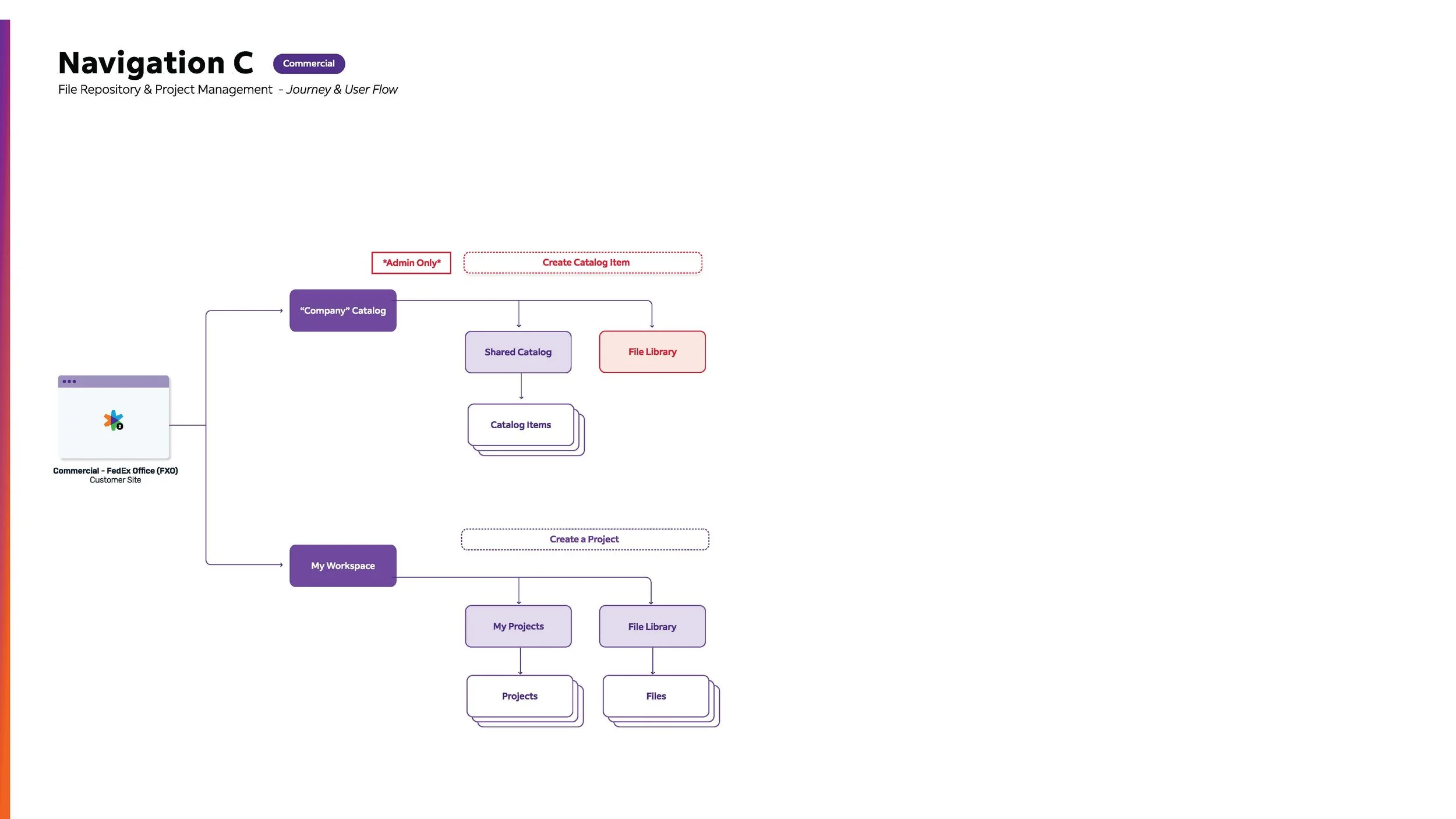
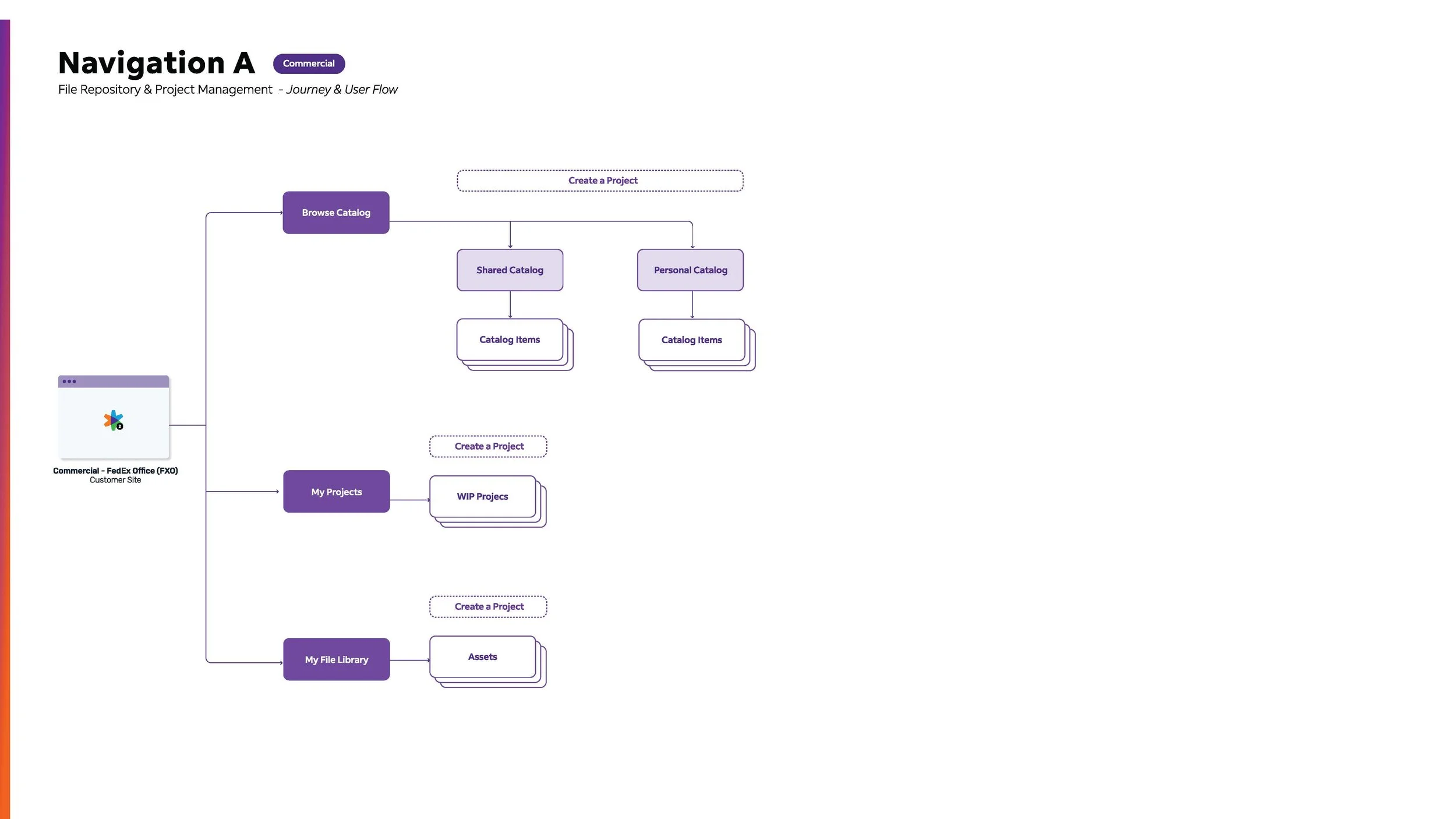
Architecture: Developed complex user flows, schematics, and information architecture for the catalog and file repository.
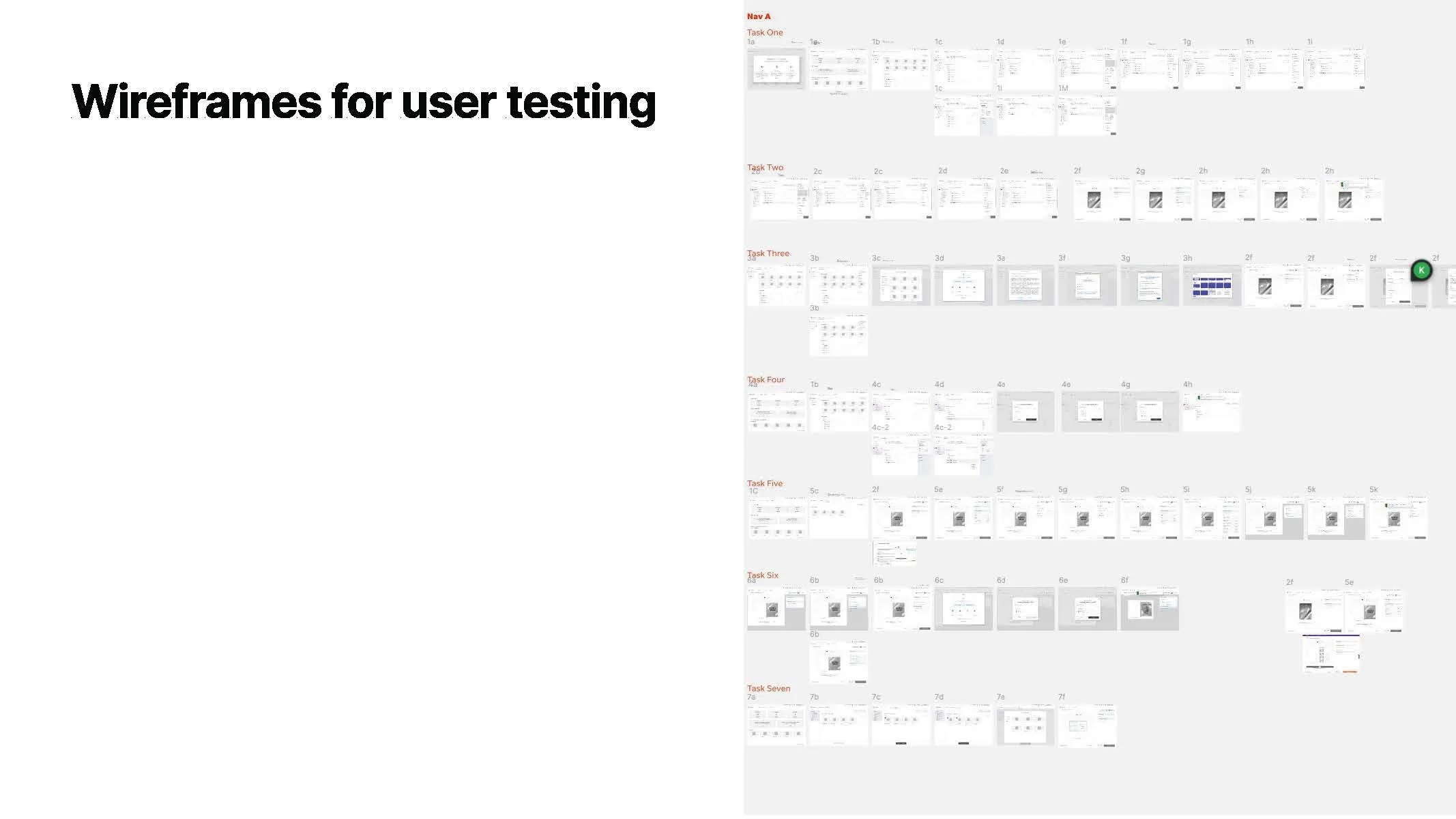
Execution: Created high-fidelity wireframes and interactive prototypes in Figma for the new "Shared Catalog" and "Product Configurator."
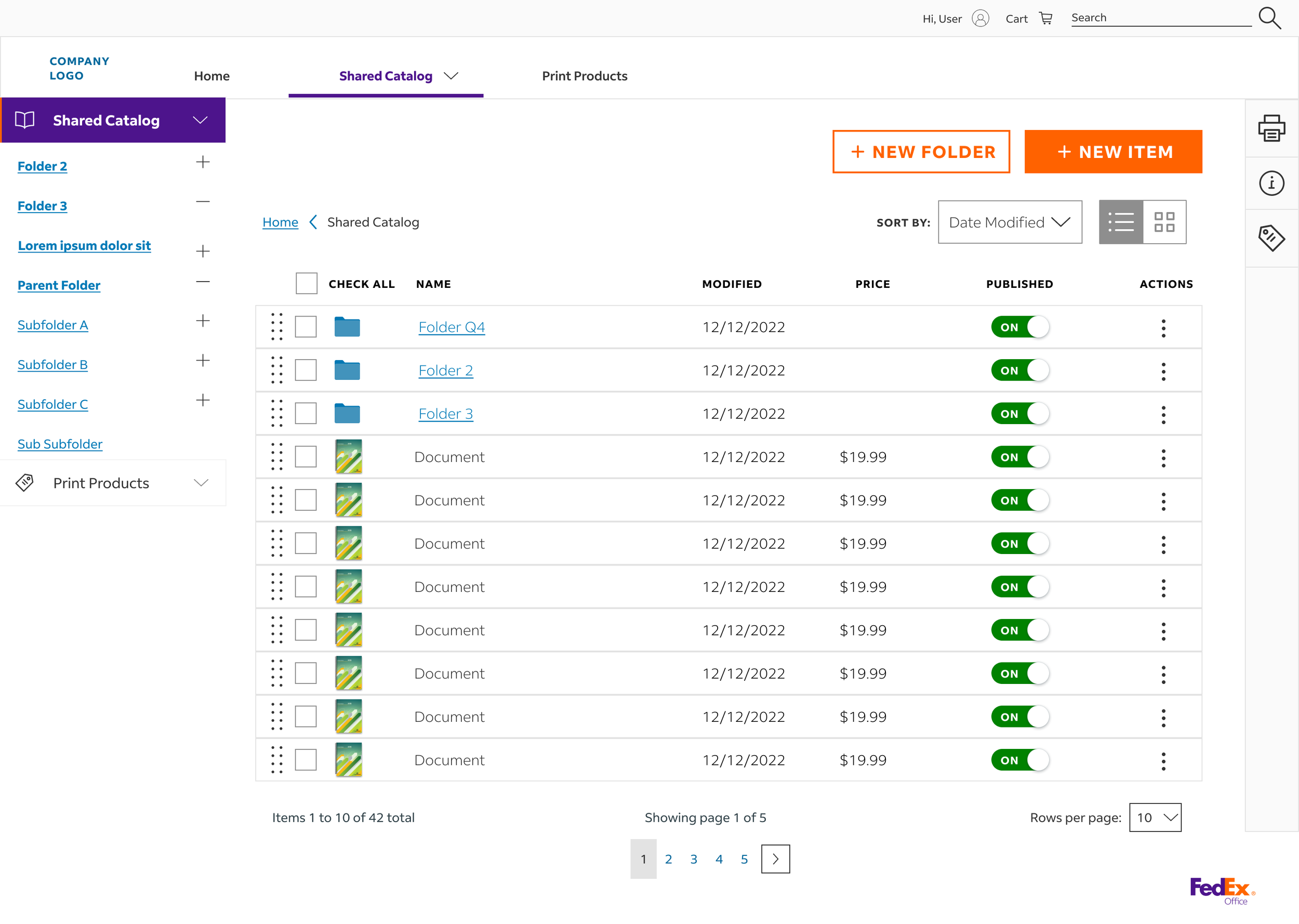
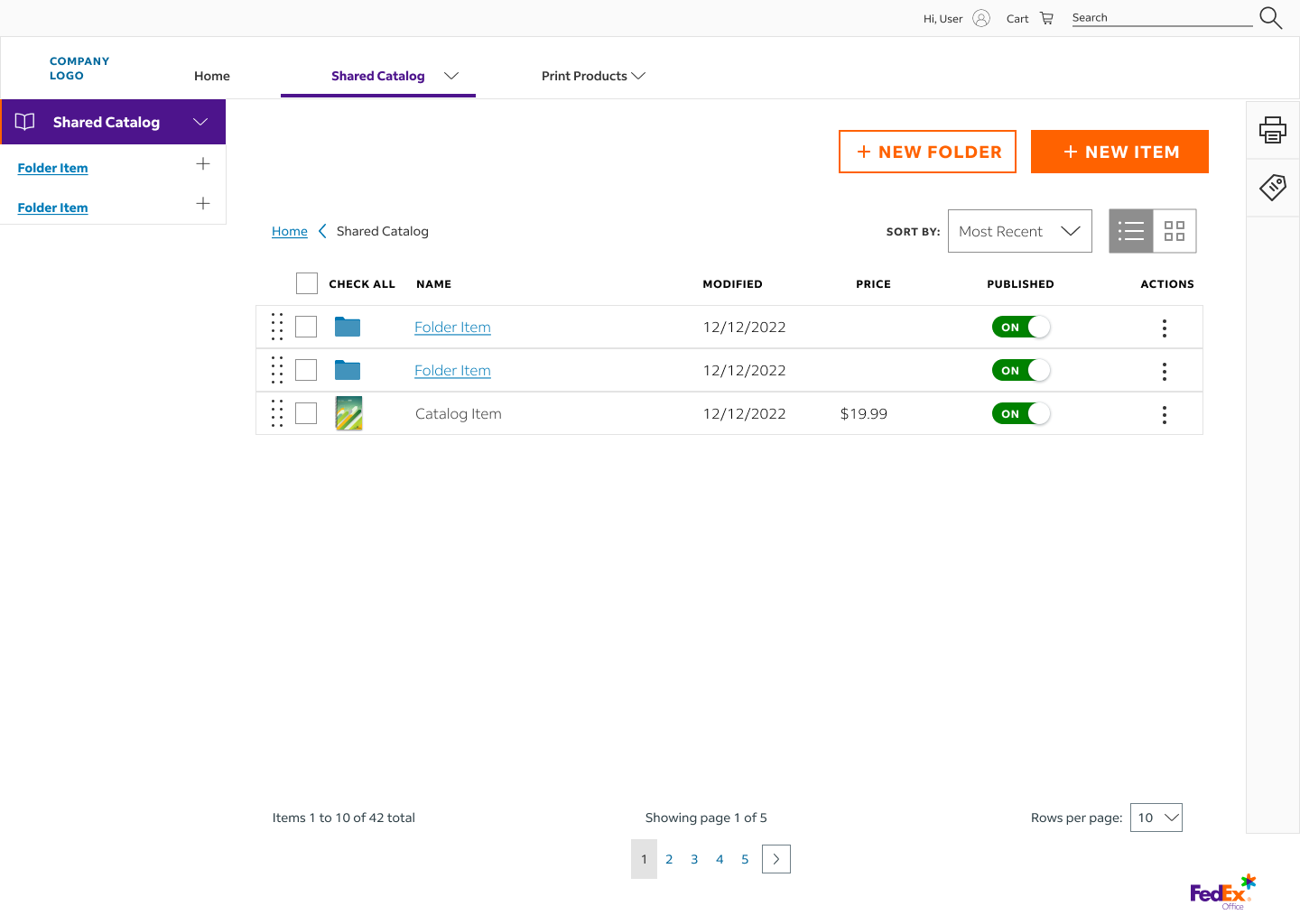
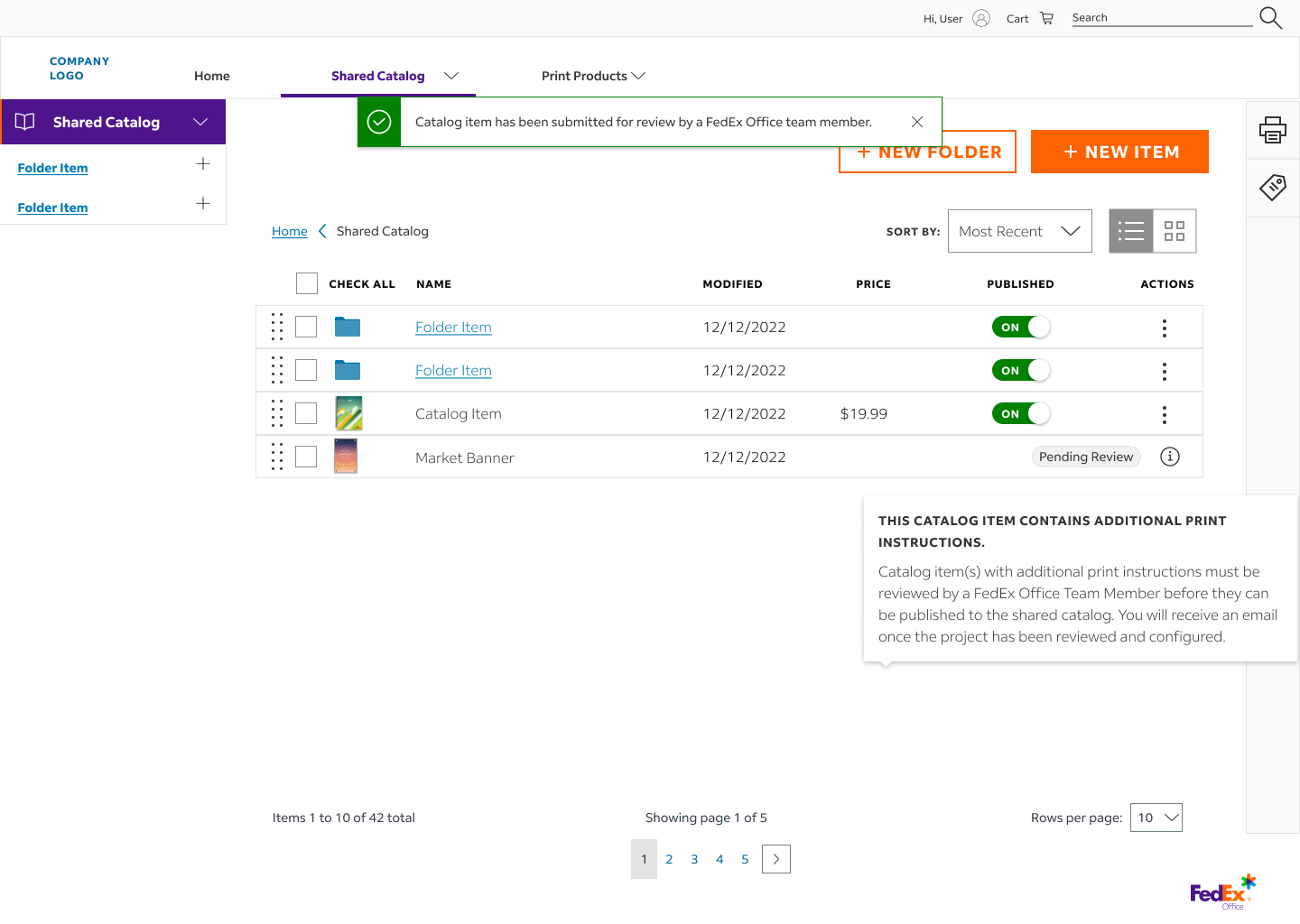
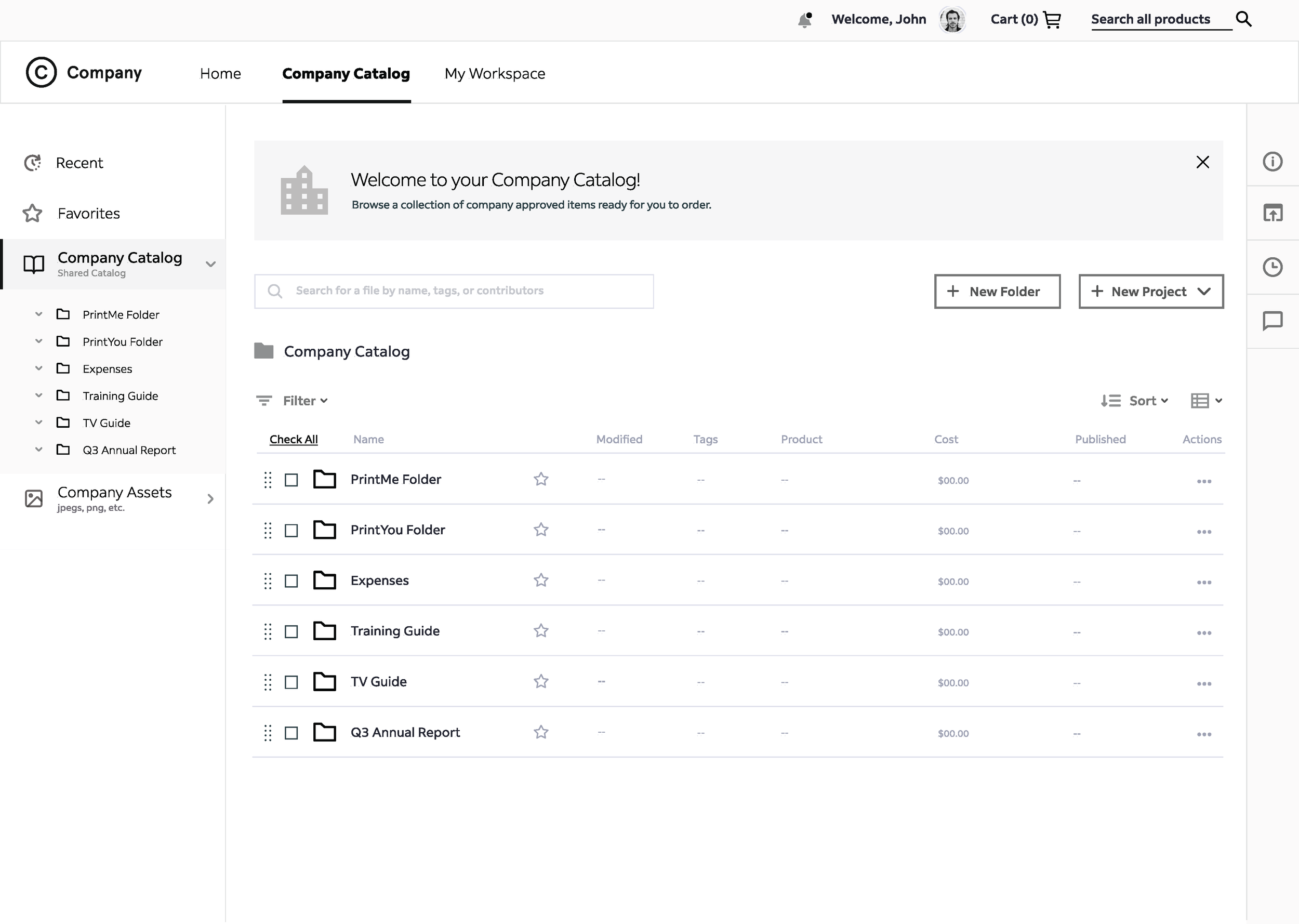
This is the shared catalog page where users can place print orders that are configured by their admin employees at their company.
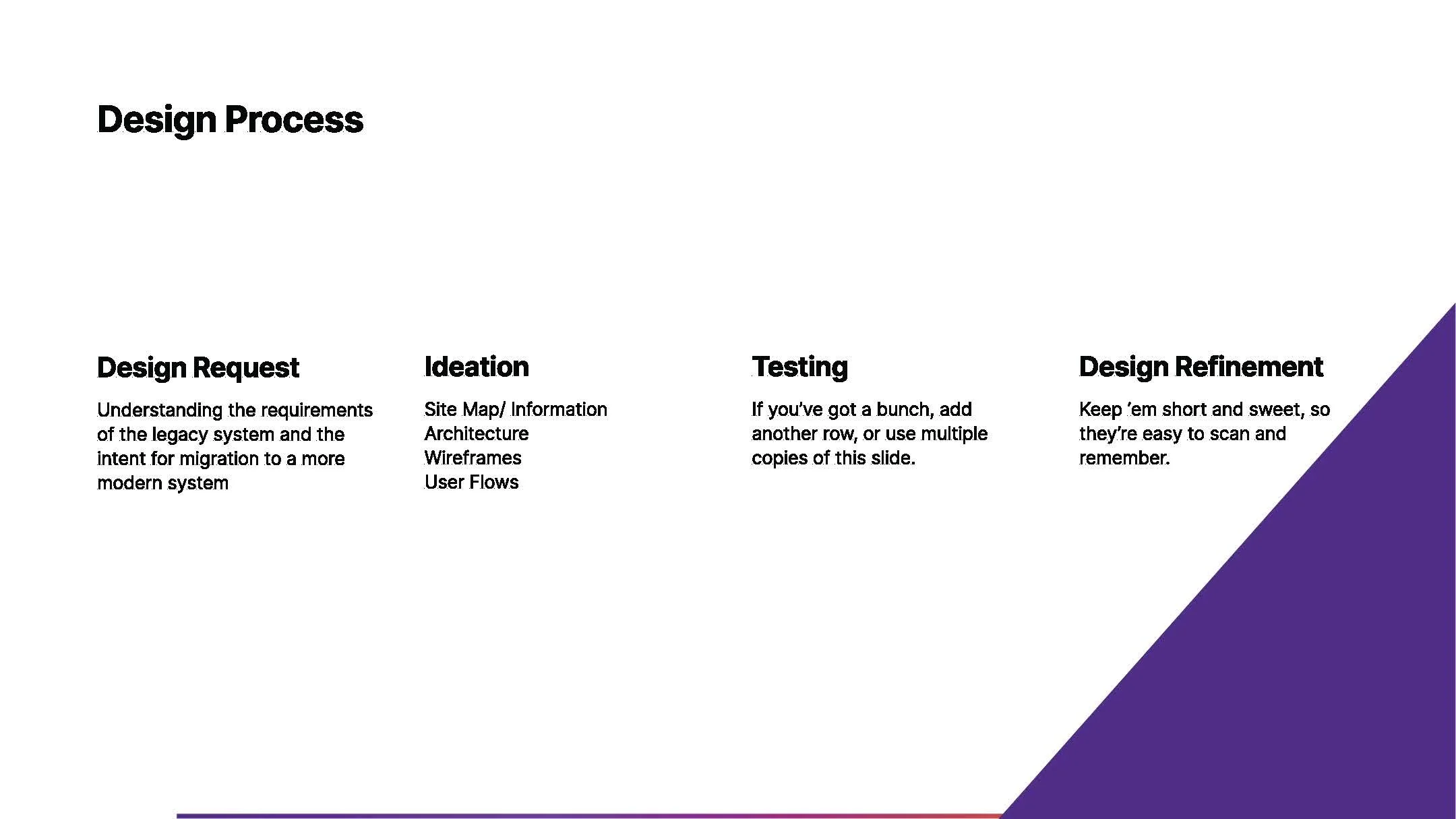
The Process
Discovery & Analysis: We started by auditing the legacy system to identify "must-have" features versus outdated clutter.
Wireframing & Prototyping: I utilized iterative testing cycles to refine the "Product Type Modal" and "Toast Messages" to ensure users felt guided rather than lost.
Collaboration: Held daily syncs with the engineering team to ensure the technical migration didn't compromise the user experience (maintaining speed and data integrity).
Key Solutions
1. Centralized Shared Catalog
I designed a unified catalog system that allows B2B clients to view company-approved print assets in one place. This reduced the time spent searching for specific product types and ensured brand consistency for the client.
2. Intelligent Product Configurator
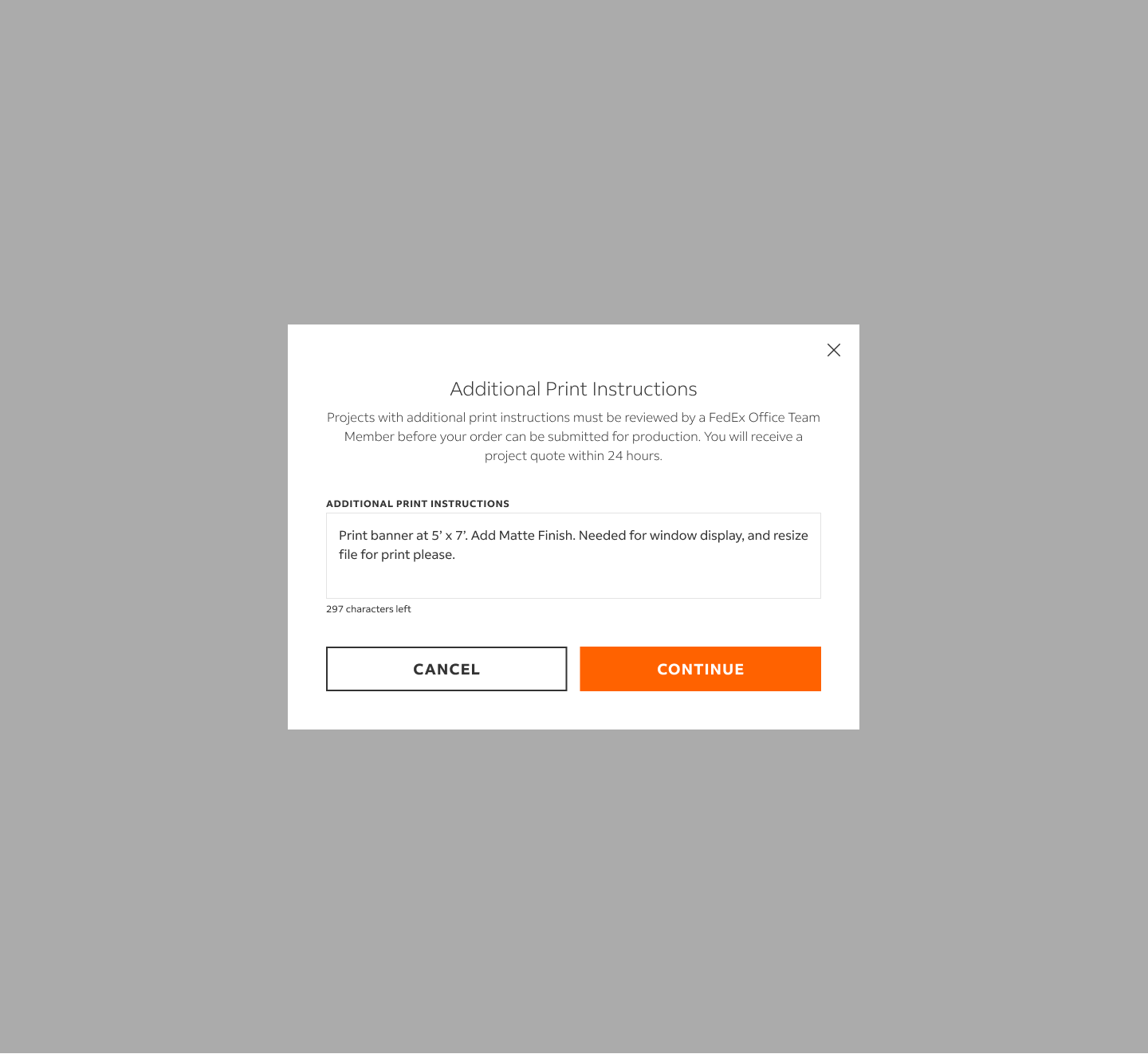
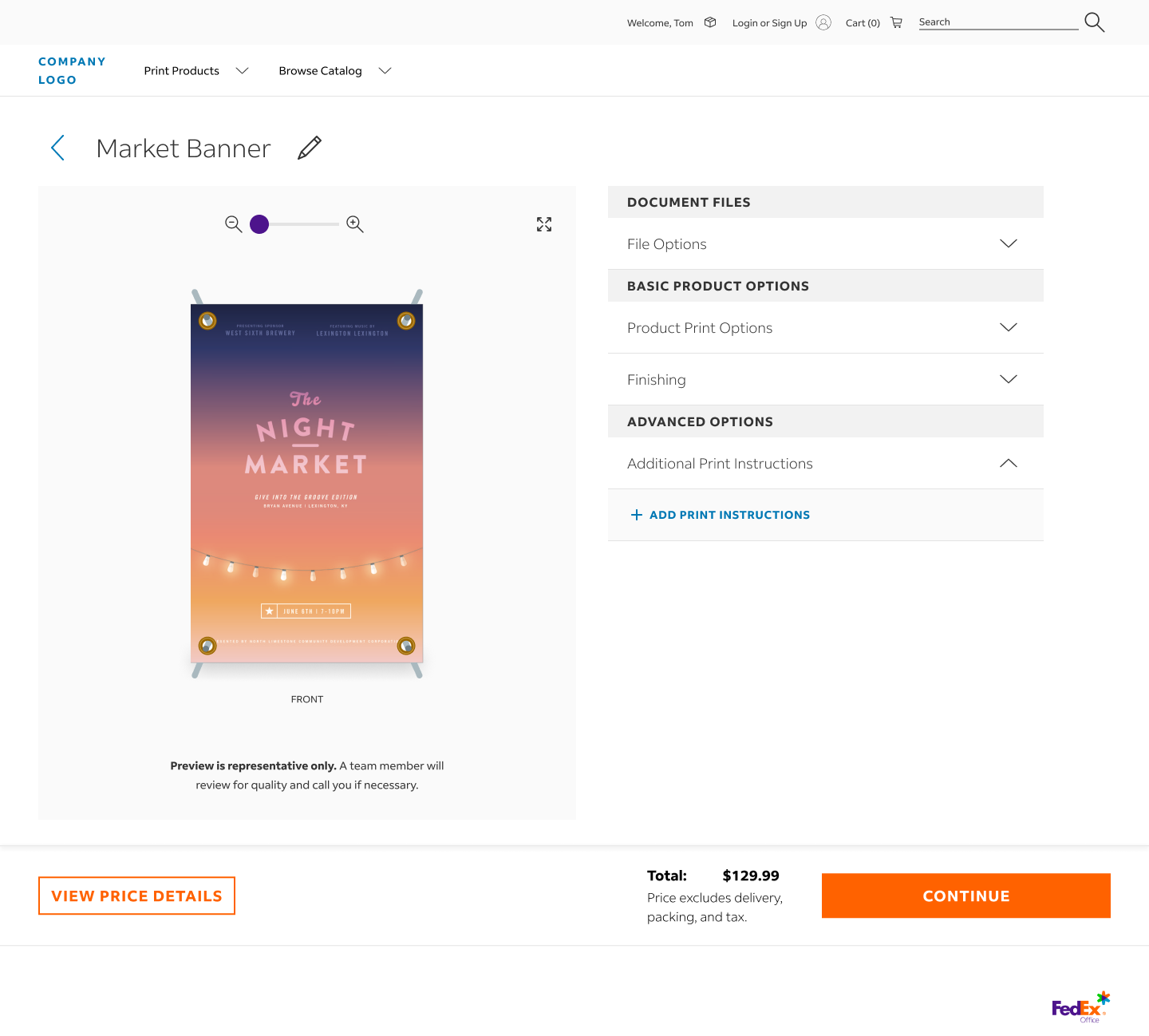
One of the most complex parts of the migration was the print configurator. I redesigned the modal-based interface to allow for "Additional Print Instructions" and real-time validation, reducing the likelihood of incomplete or incorrect orders.
3. Integrated File Repository
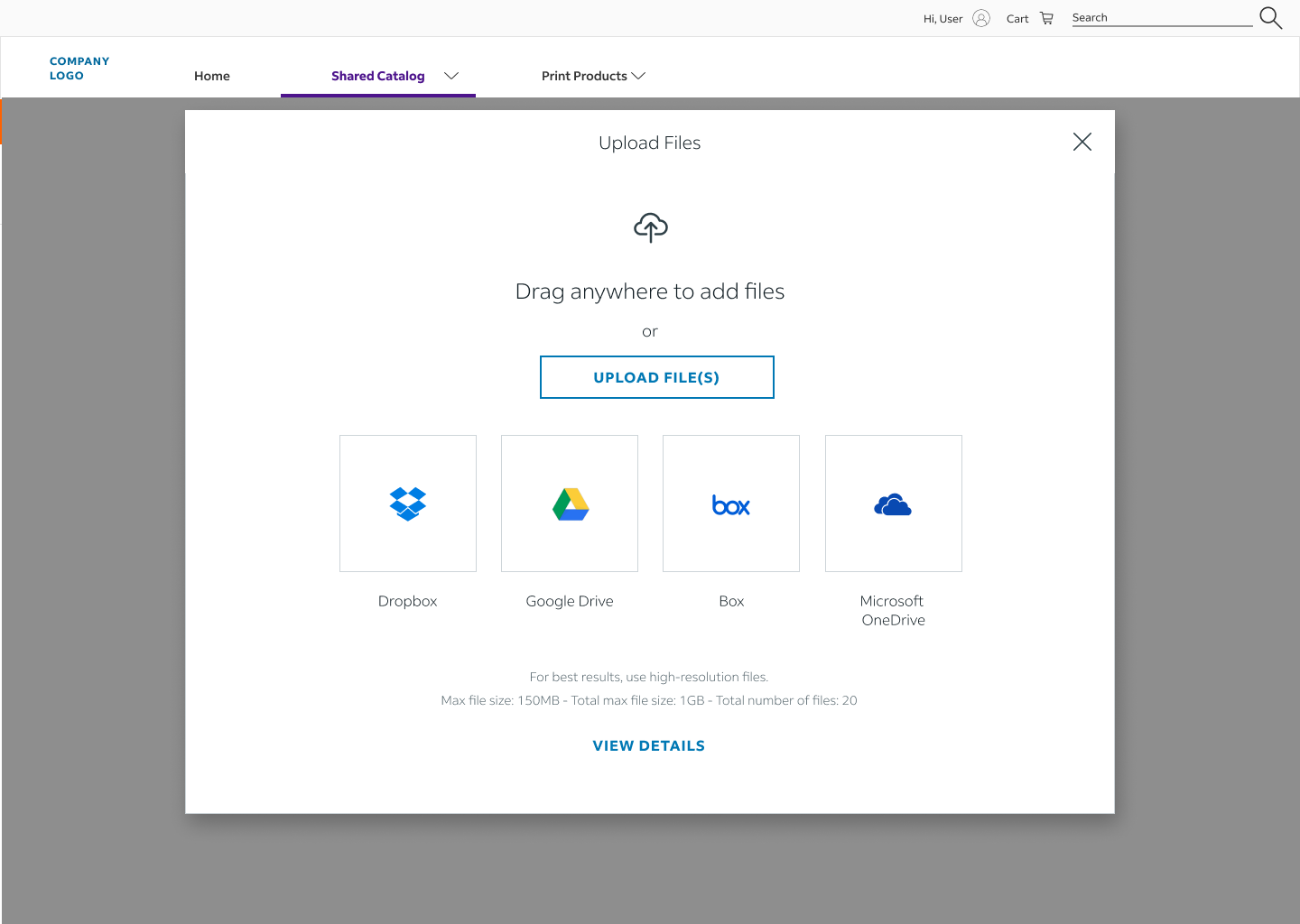
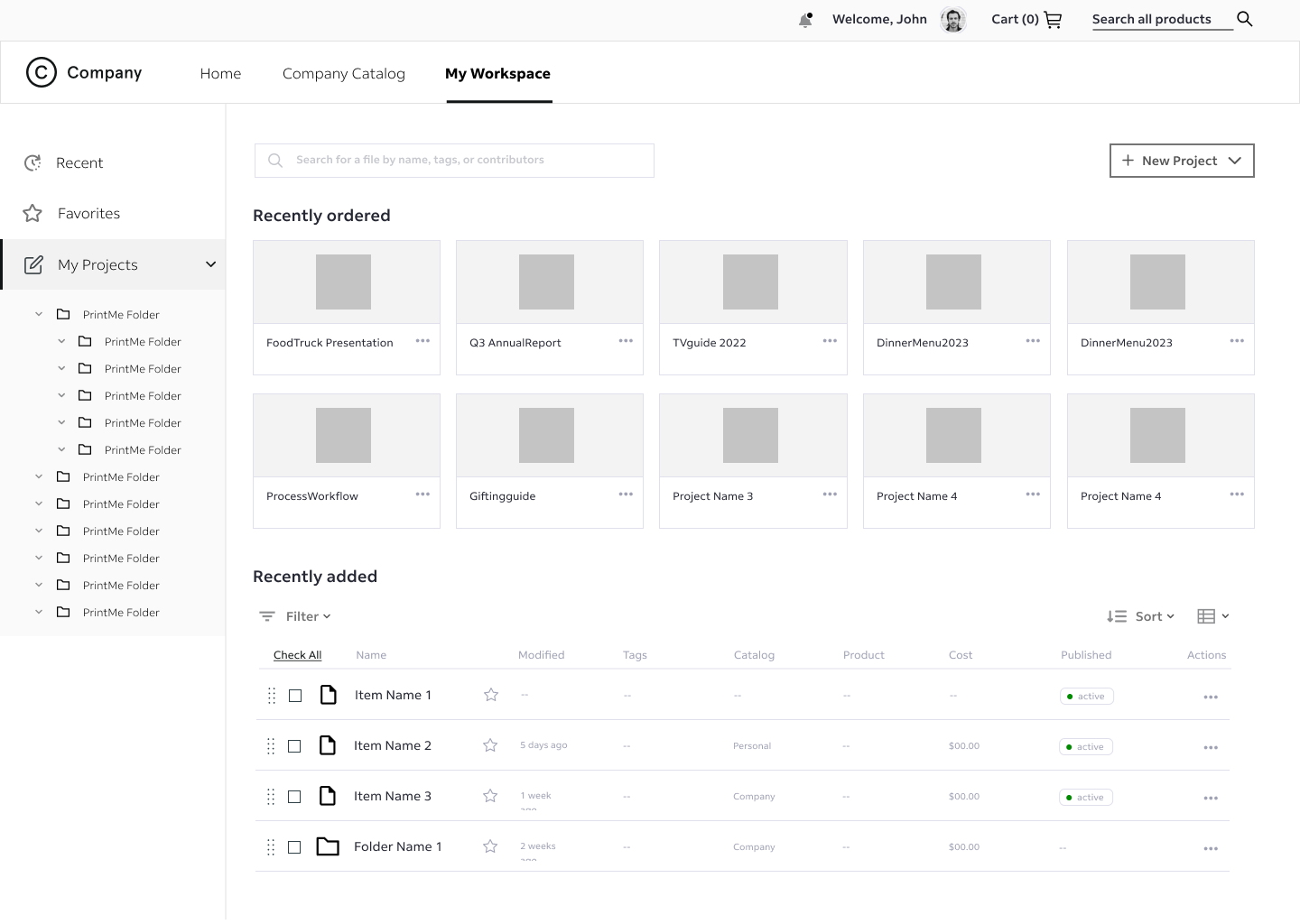
To solve the issue of fragmented workflows, I integrated a project management discovery phase into the file upload process. Users can now manage their print-ready files directly within the ordering flow, creating a seamless "Upload-to-Order" experience.
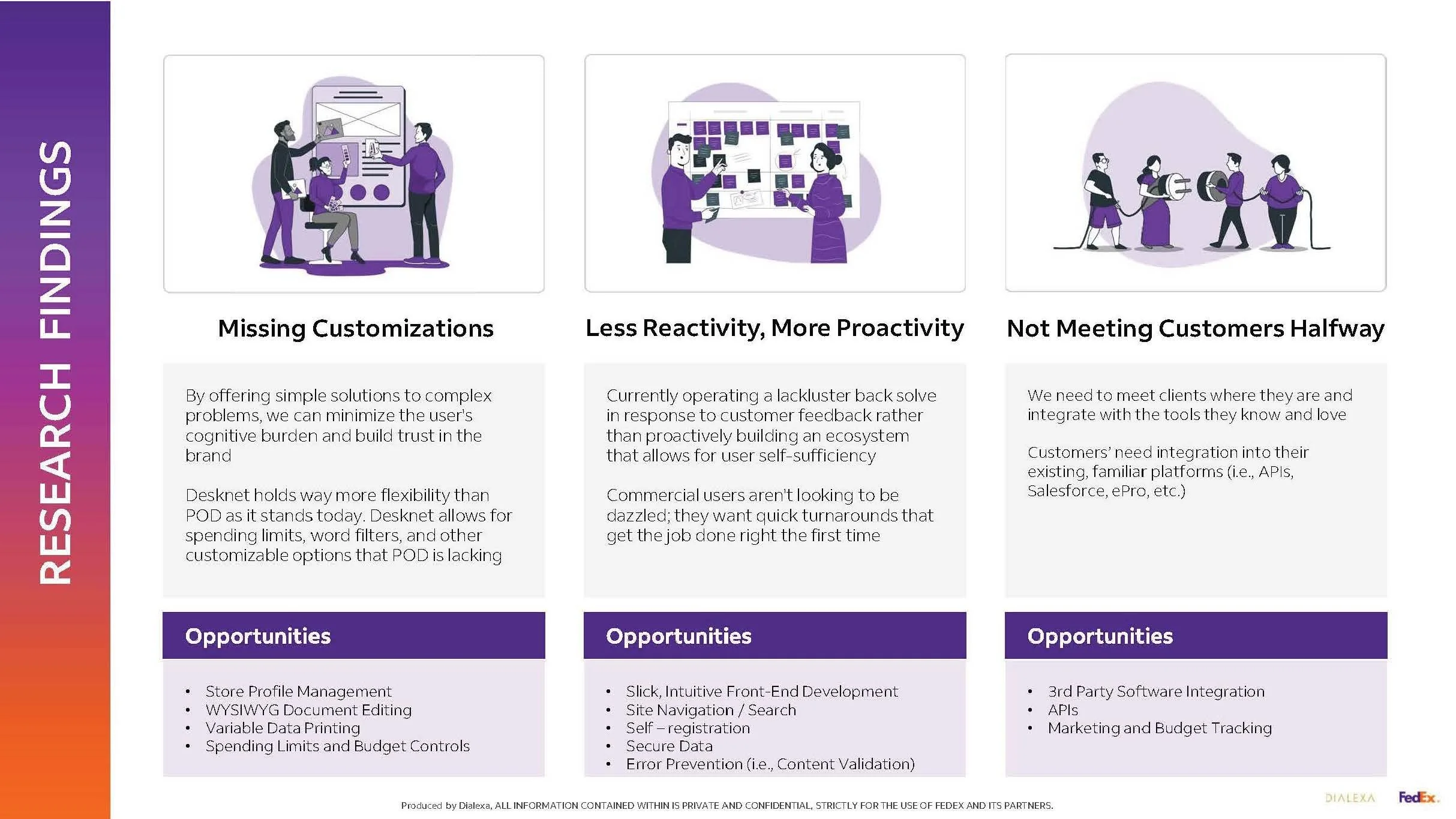
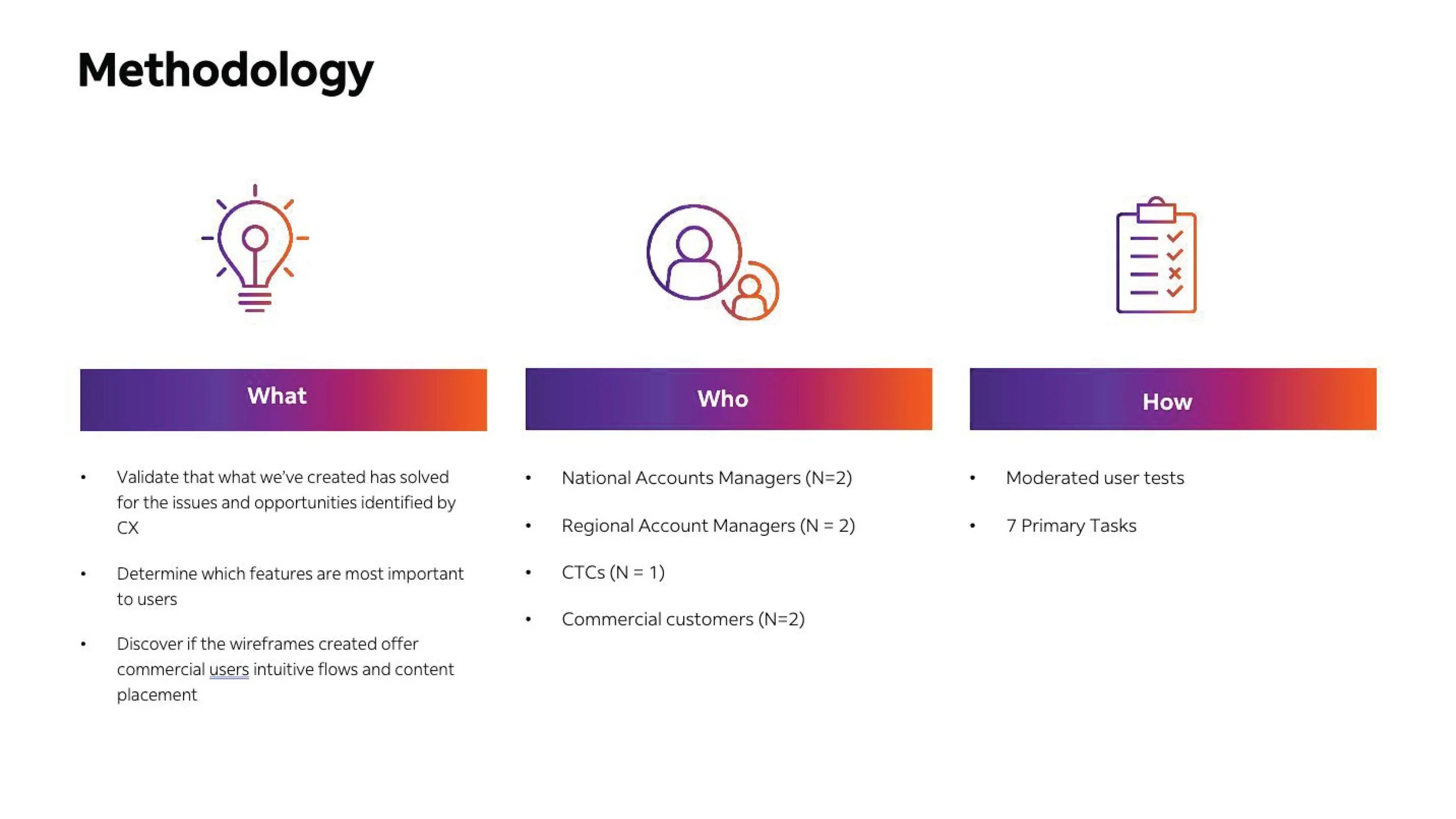
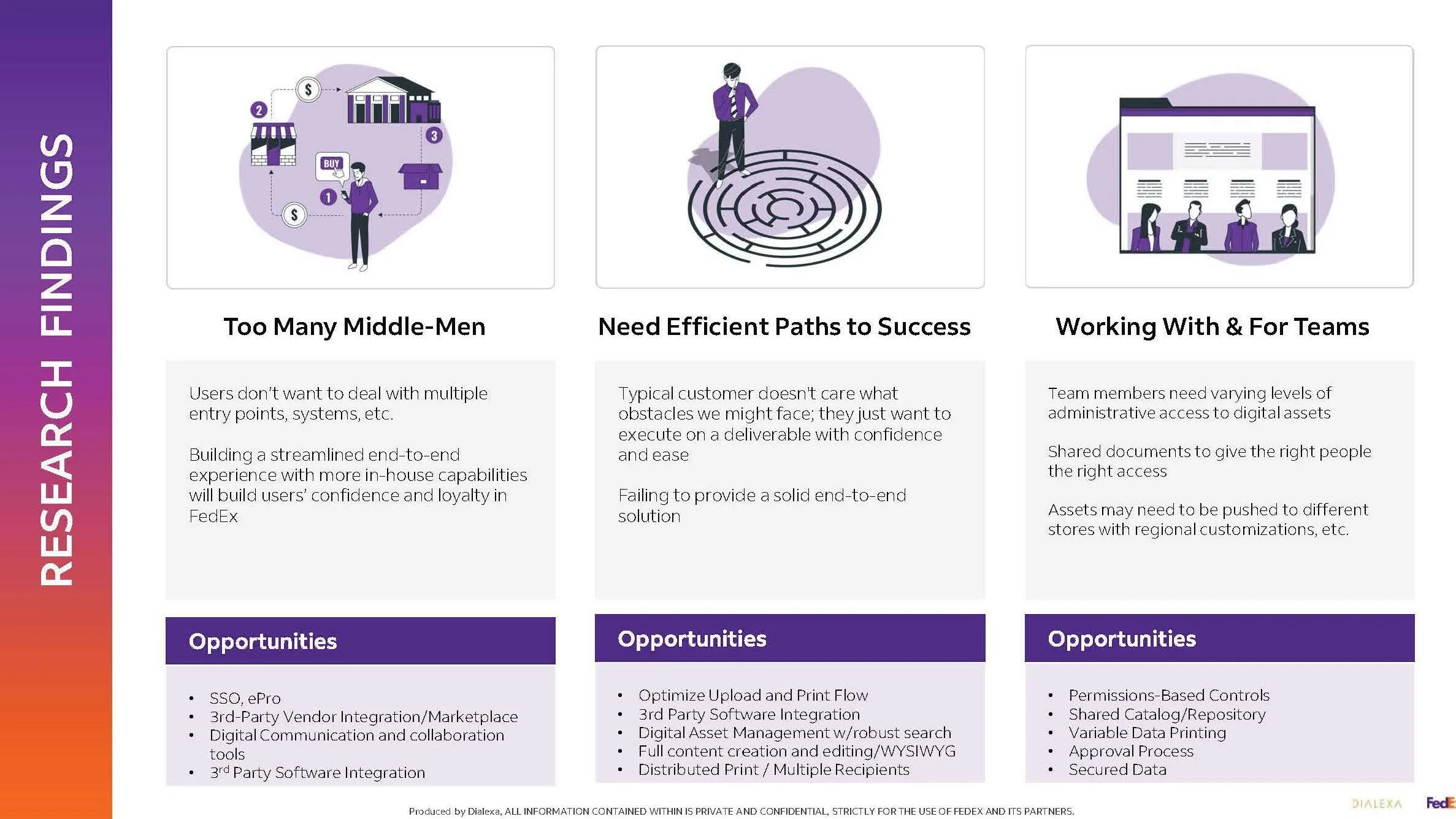
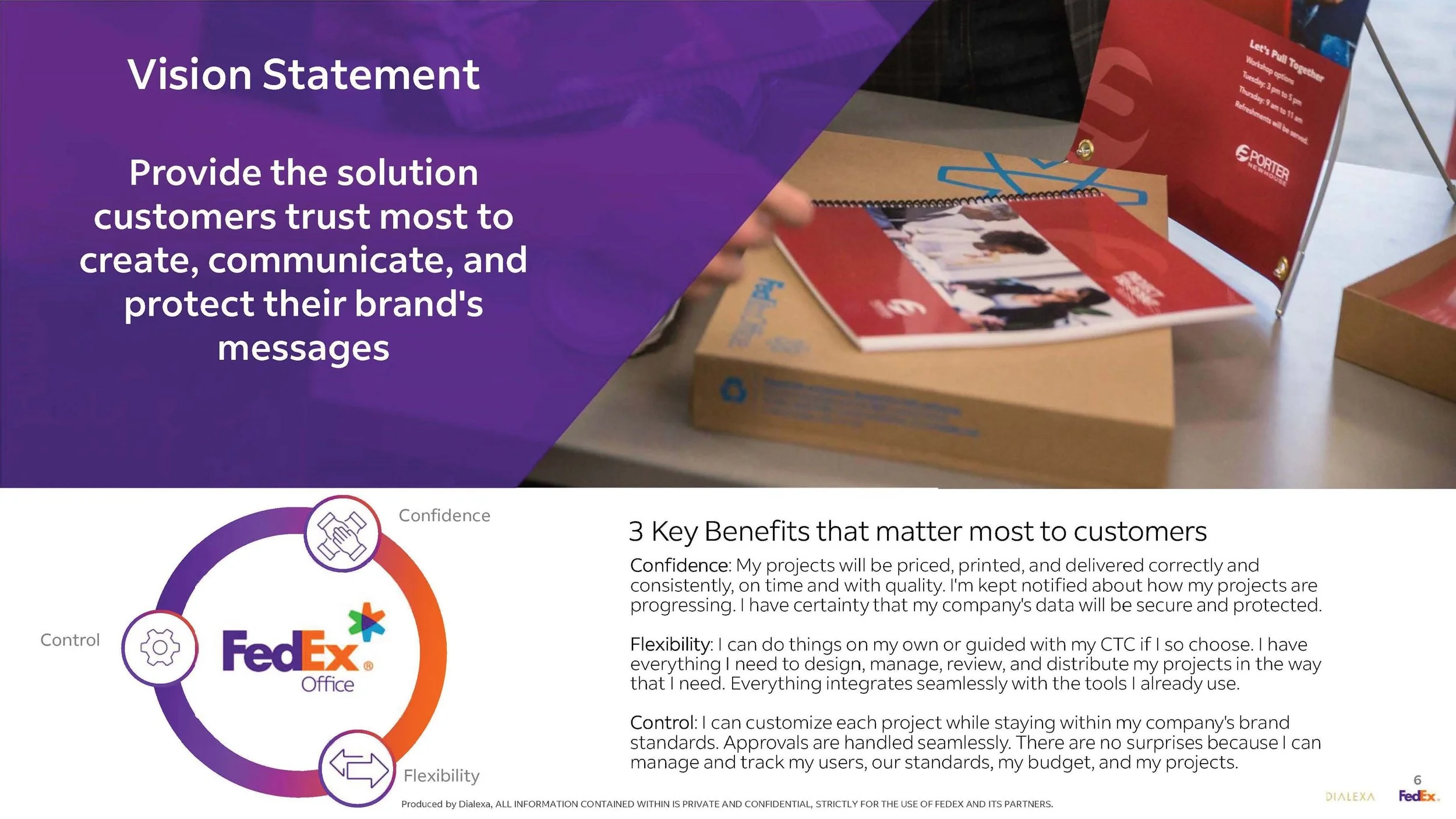
Research findings for solutioning for the future state of the design.
Impact & Results
Reduced Time-to-Order: Streamlined the configuration process, leading to a significant reduction in average order completion time.
Lower Support Volume: Intuitive UI patterns reduced the need for manual associate intervention for "Special Instructions."
Future-Proofing: The new modular design system allows FedEx to easily add new product types to the catalog without needing a full system overhaul.
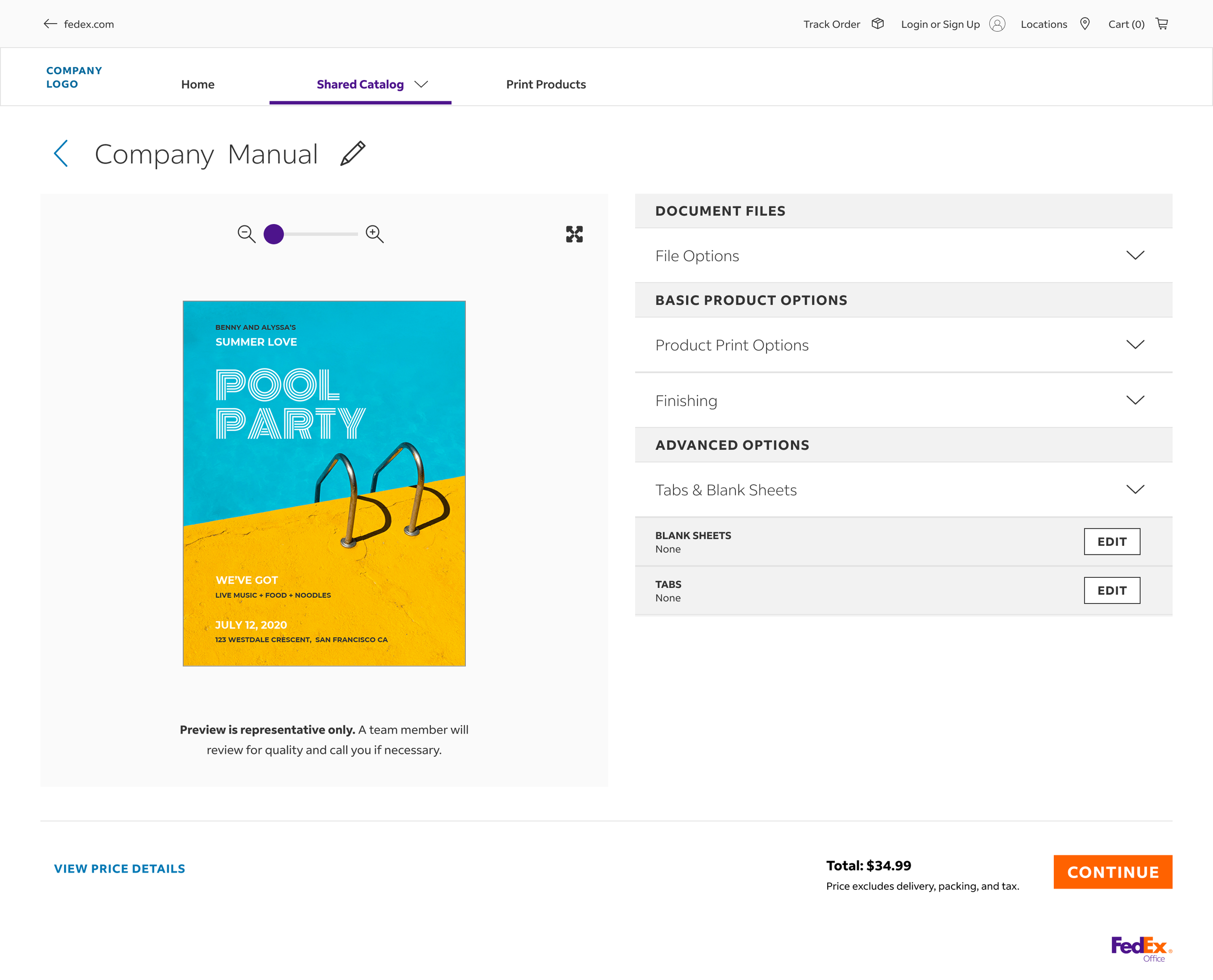
The print configurator, where users can configure and customize their print orders to save to their shared catalog.
SLIDES